
The stack
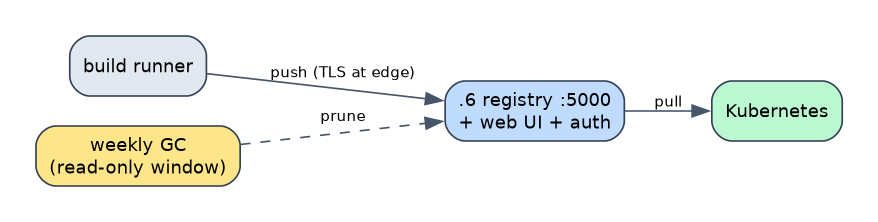
Two containers, run with Docker Compose, plus a sprinkle of auth:
Registry-Server (10.100.100.6)
  registry        (registry:2)         :5000  - the registry API
  registry-ui     (joxit UI)           :8080  - a browser front-end
  auth: htpasswd  (user <REDACTED>)            - basic auth on pushes/pulls
  fronted by HAProxy: registry.example.com (API) + docker.example.com (UI)
- The registry itself serves the Docker/OCI API on
5000. Basic auth (an htpasswd file) means you can't push or pull without credentials. - A web UI gives a human-friendly view of what's stored — handy for confirming a tag landed.
- The edge publishes both:
registry.example.comfor the API anddocker.example.comfor the UI, with TLS as always handled by HAProxy.
A small but important detail: clients push to the public TLS name (registry.example.com), so Docker is happy about certificates, rather than to a plain-HTTP internal address (which would require fiddly "insecure registry" config on every client). One more payoff of terminating TLS at the edge.
Why we use this: a registry is "just" an HTTP API in front of a blob store — but auth, TLS, and a UI are what make it usable and safe. Assembling those from small pieces is more instructive than any managed registry.
Diagram
No comments to display
No comments to display